Dentist Downers Grove | General & Cosmetic Dentistry | Dentist Woodridge,IL

Text Size:+-
Aurora (630) 884-8194

Downers Grove (630) 884-8174

Office Hours: Mon–Thu: 9:00am–4:00pm; Sat:9am-2pm

  • Home
  • Patient Info
    • First Visit
    • Forms (Fill Online)
    • Dental Health
      • Dental Emergency list!
      • Child Dentistry
      • Dental Specialties
      • Oral Hygiene
      • Periodontal Maintenance
    • Financial Policy
    • Financing options and payment plans
    • Insurance Information
    • Infection Control
    • Home Care Instructions
    • Privacy Practices
  • Office Tour
  • Services
    • Deep Cleanings
    • Extractions
    • Tooth Fillings
    • Root Canal Treatment
    • Dental Bridges
    • Dental Crowns
    • Dentures / Partials
    • Teeth Whitening
    • Dental Sealants
    • Bonding
  • Advanced Technology
    • Digital Imaging
    • Intra Oral Camera
  • Contact Us
    • Locations
      • Aurora
      • Downers Grove
    • Job Opportunities

Posted on: 02.26.20 By admin

5 / 5 ( 1 vote )

The period of adjustment when you begin wearing new dentures can take time. Your dentures may not feel like they fit well at first. They may feel too large, cause slight gagging, or create excess saliva. Talk to your dental professional if you are having difficulty speaking clearly or eating.

Your First Month

As your mouth heals, these symptoms will fade and your dentures will feel more comfortable.

Here’s what you can expect in the first 30 days:

  • Day 1: The hardest day. Start out eating soft foods that are gentle on your gums and teeth
  • Days 2-14: You may experience excess saliva, sore spots, and increased discomfort during this healing time
  • Day 15+: Sore spots are healing and saliva build-up has decreased, but you may still have trouble speaking clearly and eating. Contact your dentist if you think your dentures need adjustment

Cleaning Dentures and Denture Care

Cleaning dentures can help them look their best, while also helping to kill odor-causing bacteria.

  1. Prepare: Drop one denture cleansing tablet into enough warm water to cover dentures
  2. Soak: Place dentures in solution and soak them for the recommended period of time per use instructions
  3. Rinse: Remove dentures and rinse them thoroughly with running water
  4. Dispose: Dispose of solution immediately and wash hands

Advantages of Wearing Dentures

You will become more confident as you get used to your dentures. As you start to feel more comfortable with dentures, you will also notice the positive impact they have on your life. The positive effects of dentures include:

  • Improved appearance
  • The ability to speak more clearly
  • Increase in confidence
  • You will be able to eat the foods you love

Using Denture Adhesives

Denture adhesives create a thin, glue-like film between your dentures and gums to help seal out food and secure your dentures in place. About 15 days after you start wearing dentures, or after your gums are healed completely, consider using a denture adhesive cream. Be sure to carefully follow the directions when using a denture adhesive cream, and do not use more than directed. Denture adhesives can help you eat, drink, laugh, and talk with confidence.

Call Alivio Dental to schedule an appointment today! Proudly serving patients from Aurora,IL, Naperville,IL, Oswego,IL, Downers Grove, IL, Lisle, IL, Darien, IL, Lombard, IL, Clarendon Hills, IL, Bollingbrook, IL, Woodridge, IL, Westmont, IL, La Grange, IL and Wheaton, IL communities now.

Credits: Procter & Gamble

https://www.aliviodentalcare.com/2020/02/26/new-dentures-care-dentist/

Dental Bonding

Posted on: 04.1.19 By admin

5 / 5 ( 1 vote )

What is Bonding?

Bonding is the application of a tooth-colored composite resin (plastic) to repair a decayed, chipped, fractured or discolored tooth. Unlike veneers, which are manufactured in a laboratory and require a customized mold to achieve a proper fit, bonding can be done in a single visit. The procedure is called bonding because the material bonds to the tooth.

What it’s Used for?

Bonding is among the easiest and least expensive of cosmetic dental procedures. The composite resin used in bonding can be shaped and polished to match the surrounding teeth. Most often, bonding is used for cosmetic purposes to improve the appearance of a discolored or chipped tooth. It also can be used to close spaces between teeth, to make teeth look longer or to change the shape or color of teeth.

Sometimes, bonding also is used as a cosmetic alternative to amalgam fillings, or to protect a portion of the tooth’s root that has been exposed when gums recede.

Preparation No preparation is needed for bonding. Anesthesia often is not necessary, unless the bonding is being used to fill a decayed tooth.

How it’s Done

Your dentist will use a shade guide to select the composite resin color that will match the color of the tooth most closely.

Once your dentist has chosen the color, he or she will slightly abrade or etch the surface of the tooth to roughen it. The tooth will be coated lightly with a conditioning liquid, which helps the bonding material adhere.

When the tooth is prepared, your dentist will apply the tooth-colored, putty-like resin. The resin is molded and smoothed until it’s the proper shape. Then the material is hardened with an ultraviolet light or laser.

After the bonding material hardens, your dentist will further trim and shape it. Then he or she will polish the material until it matches the sheen of the rest of the tooth surface.

It usually takes about 30 minutes to an hour to complete the procedure. If you’re having more than one tooth done, you may need to schedule several visits.

Tea, coffee, cigarette smoke and other substances can stain the resin. To prevent or minimize stains, it’s essential to avoid eating or drinking foods that can stain for the first 48 hours after any composite procedure. In addition, brush your teeth often and have them cleaned regularly by a dental hygienist.

Risks of Bonding

The composite resin used in bonding isn’t nearly as strong as a natural tooth. Biting your fingernails or chewing on ice or pens can chip the material. Bonding usually lasts several years before it needs to be repaired. How long it actually lasts depends on how much bonding was done and your oral habits.

When to Call a Professional

In the days after having the bonding done, call your dentist if you notice sharp edges on the bonded teeth, or your teeth feel strange or “off” when you bite down.

At any time, call your dentist if the bonding chips or pieces fall out.


Credits: InteliHealth Inc.

Root Canal Therapy

Posted on: 04.1.19 By admin

5 / 5 ( 1 vote )

Why Would I Need A Root Canal?

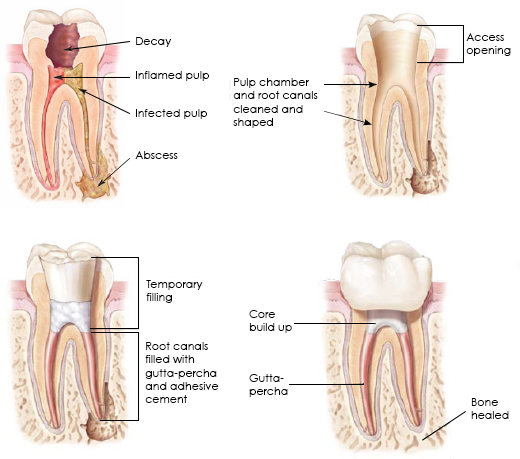
When the pulp (commonly referred to as the nerve , connective tissue and blood vessels inside of the tooth) becomes damaged from decay, repeated dental procedures, crack, or trauma, the tooth may cause you pain or lead to an infection. More than 15 million teeth receive endodontic treatment each year. “Endo” is the Greek word for “inside” and “odont” is Greek for tooth. During root canal treatment, the endodontist cleans out the inflamed or infected tissue, then fills and seals the space inside the tooth. Afterwards, your dentist will place a permanent restoration to protect the tooth and place it into full function. Therefore you can keep your natural tooth as a healthy part of your mouth for years to come.

Why would I need a root canal?

How would I know I need a root canal?

Signs to look for include temperature sensitivity to cold or hot, tenderness of teeth to touch or biting, discoloration of the tooth, and swelling. Sometimes there are no symptoms, however your general dentist notes a sign of infection or defect during an examination. Our specialists will do a thorough evaluation in order to come up with a proper diagnosis. If you have any questions in regards to root canal therapy, please ask. We believe your experience at our office will be more pleasant if you have a good understanding regarding your treatment.

Can all teeth be treated with endodontic treatment?

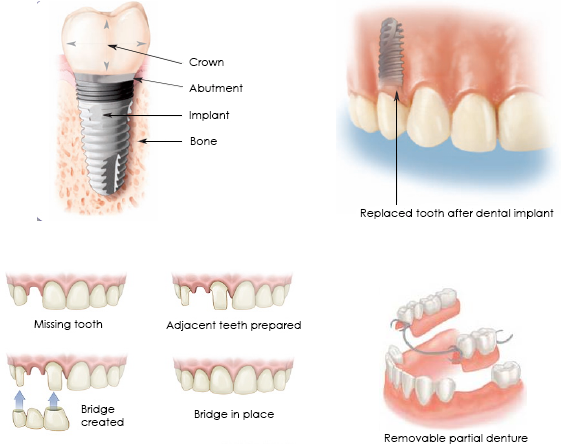
Advances in endodontics are making it possible to save most teeth with root canal therapy. In an epidemiologic study of more than 1.4 million patients assessed during a period of 8 years, it was found that non-surgical endodontic treatment had a very predictable outcome, with 97% of the teeth retained. Though endodontic procedures are intended to help save your natural tooth, this is not always possible. Occasionally a tooth will require extraction because the root canals are not accessible, the root is fractured, inadequate bone support around the tooth, or the tooth cannot be restored and placed back into function. Missing teeth can make you self-conscious, affect your chewing ability, and cause other healthy teeth to shift. Due to these negative impacts on your overall health, the extracted tooth whenever possible should be replaced by your dentist with an implant, bridge, or removable partial denture.

Can all teeth be treated with endodontics?

After root canal procedure will the tooth need additional treatment in the future?

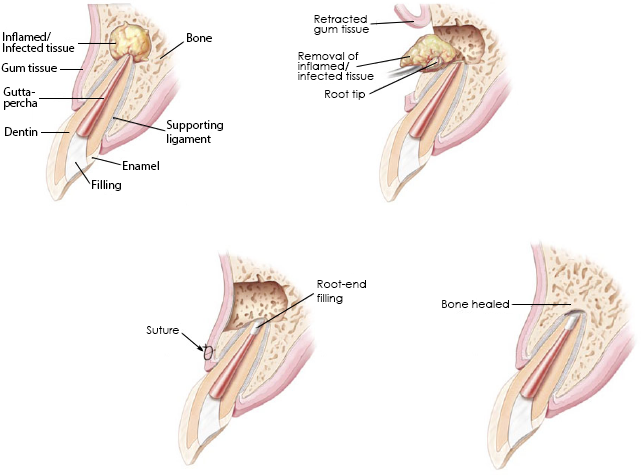
If retreatment is not an option, endodontic surgery should be considered to save your natural tooth. The most common surgical procedure is a root end resection (apicoectomy). This procedure is occasionally required when inflammation or infection persists in the bony area at the end of your tooth after root canal treatment. During this microsurgical procedure, the endodontist accesses the gum tissue near the tooth to view the underlying bone and remove any inflamed or infected tissue. The end of the root is removed and a filling is placed to seal the tooth. A few stitches / sutures are placed to help the tissue heal. Post-surgical discomfort is generally mild and most patients return to their normal activities the following day.

After a root canal procedure

Will I feel pain during or after the procedure?

Most patients report that they are comfortable during the procedure due to modern advances in technologies and techniques. After all, endodontic procedures are performed to relieve the pain of toothaches caused by an inflamed or infected pulp. For the first few days after a root canal you may feel some discomfort or experience slight swelling especially if there was pain or infection prior to the procedure. It is not abnormal to feel some tenderness in the area immediately after the procedure is completed as your body undergoes the natural healing process. These symptoms are temporary and the discomfort can be relieved with over-the-counter or prescription medications. Follow the endodontist’s instructions carefully after the completion of the root canal procedure. If you feel pain or swelling that is getting worse, please contact our office.

Call Alivio Dental for any other questions and to schedule an appointment today! Proudly serving patients from Aurora,IL, Naperville,IL, Oswego,IL, Downers Grove, IL, Lisle, IL, Darien, IL, Lombard, IL, Clarendon Hills, IL, Bollingbrook, IL, Woodridge, IL, Westmont, IL, La Grange, IL and Wheaton, IL communities now.

Orthodontics and braces pain

Posted on: 03.25.19 By admin

5 / 5 ( 1 vote )

A beautiful smile depends on a healthy mouth

Everybody knows that braces, or orthodontics, straighten their teeth and improves their smile, but it’s important to understand that good oral hygiene is the key to keeping your teeth and gums healthy and attractive long after your braces come off. In order to keep your teeth plaque-free and avoid the unsightly “white spots” that can develop around your braces, you need to understand how to keep your teeth and orthodontic devices clean. Brushing and flossing with braces requires extra effort but that effort will pay off in the long run.

How should I brush with braces?

How your teeth look when your braces come off depends on how you take care of them while they’re on. An electric rechargeable toothbrush is specially designed to clean around orthodontic appliances can help. Before you get started, remove elastics, bands or removable parts of your orthodontic appliances.

  • Hold the brush parallel to the floor against the side of your teeth. Guide the electric rechargeable brush head from tooth to tooth, following the natural curve of your teeth and gums
  • Hold the brush in place on each tooth for a few seconds before moving on to the next tooth – With an electric rechargeable toothbrush, you don’t have to press hard or scrub. Just let the brush do all the work for you
  • Don’t forget to brush the insides of teeth, the tops of teeth, and the back of your mouth behind your back molars
  • Clean brackets by angling the brush head against them. Make sure the brush also cleans under the wires

Remember to replace your toothbrush or brush head every 3 months so it continues to clean efficiently.

Flossing with Braces

Although it can be difficult, for healthy teeth and gums, flossing with braces is still very important.

  • Insert the floss threader between 2 teeth below the wires of your braces. Pull the floss halfway through
  • When you reach the gumline, pull the floss into a C-shape
  • Make sure to floss below the gumline with a gentle up-and-down motion

Don’t forget to rinse

Rinse twice a day, after brushing, to help prevent cavities, strengthen enamel, and freshen breath. Use a fluoride toothpaste without the burn of alcohol.

Braces Background

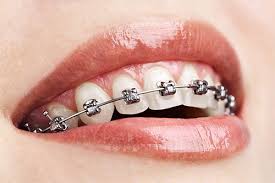
Knowing a bit about how orthodontics work can help you prepare for the braces pain you might experience. Braces place continuous pressure on the teeth to slowly move them into a different position. The key components of braces are:

  • Brackets: A bracket is attached to each tooth or to a band placed around the tooth. Brackets hold the wires that actually cause the teeth to move. Braces pain associated with brackets may include pain from the band or the brackets.
  • Wires: The wires used for braces are known as arch wires. They are attached to the brackets, and an orthodontist adjusts them at regular visits. Sometimes braces pain occurs soon after the braces are adjusted. (1), (2)

What Causes Braces Pain?

Braces can correct misaligned teeth to improve your smile and your dental health, but braces pain can make you uncomfortable. The exact cause of braces pain is unknown, but it may be attributed to internal or external factors.

  • Internal: Some research has shown that braces pain may be caused by changes in blood flow that occur when the braces apply pressure to the teeth.
  • External: The physical rubbing of the brackets and wires can cause braces pain in the soft tissue inside the mouth. This type of braces pain usually lessens with time, as the tissues become tougher. Sometimes one of the arch wires can cause braces pain by poking into the back of the mouth, but orthodontic wax can usually relieve this. (1), (2)

How to Soothe Braces Pain

Many products are available to provide relief of braces pain. For pain associated with the pressure of the braces, try over-the-counter pain relieving products. Motrin or Advil can provide relief of braces pain, or you can use topical pain relieving products. Ask your dentist for recommendations if your braces pain persists. In addition, toothpaste, mouth rinse, and dental floss designed for sensitive teeth can help relieve tooth pain. (1), (2)

Other Strategies to Help Relieve Braces Pain

Try these additional tips to relieve braces pain:

  • Eat Soft: If you tend to experience braces pain after an orthodontic adjustment, stick to soft foods, such as Jello®, pasta, and soft-cooked vegetables for the first day or so.
  • Brush Soft: A soft-bristled toothbrush can help ease braces pain. (2)

Protect Your Braces to Avoid Pain

If you play contact sports while wearing orthodontics, be sure to use a mouth guard. Being hit or falling during sports can cause brackets to break or wires to come loose, which causes braces pain and adds to the expense of orthodontic care. (2)

Benefits of Braces

Braces pain can be uncomfortable, but wearing braces to improve your bite can help to eliminate other types of mouth and tooth pain caused by misaligned teeth. Other benefits of braces include:

  • Easier Oral Care: Straight teeth are easier to clean, so you will be at less risk for tooth decay and gum disease.
  • Increased Confidence: When braces have corrected your misaligned teeth, you’ll enjoy the improved self-confidence that comes with a healthy smile. (3)

Call Alivio Dental for any other questions and to schedule an appointment today! Proudly serving patients from Aurora,IL, Naperville,IL, Oswego,IL, Downers Grove, IL, Lisle, IL, Darien, IL, Lombard, IL, Clarendon Hills, IL, Bollingbrook, IL, Woodridge, IL, Westmont, IL, La Grange, IL and Wheaton, IL communities now.

Sources:

  1. http://www.webmd.com/oral-health/guide/braces-and-retainers
  2. http://www.bracesguide.com/duringbraces/duringbraces08.html
  3. https://www.verywell.com/braces-and-orthodontic-treatment-1059330?

Encías sangrantes-prevención y tratamiento

Posted on: 12.20.18 By admin

EnEncías sangrantes-Aurora dentistascías sangrantes-Aurora dentistas [/Caption] notar que las encías sangrantes al cepillar o usar hilo dental pueden causar alarma. A menudo, la causa de las encías sangrantes es tan simple como cepillar demasiado duro, pero en algunos casos puede ser un síntoma de algo más grave. Sangrado de las encías causas una de las mayores causas de sangrado de las encías es la acumulación de placa en los dientes. Si se deja sin tratar esto conducirá a la gingivitis, una etapa temprana de la enfermedad de las encías. Junto con las encías sangrantes, los síntomas de la gingivitis incluyen encías rojas y hinchadas. La gingivitis ocurre cuando la placa, que contiene bacterias, se acumula en los dientes y produce toxinas que irritan las encías. Los signos de gingivitis incluyen sangrado, hinchazón, dolor, inflamación o encías rojas. La administración de la gingivitis es importante para que no progrese en una forma más seria de enfermedad de las encías. La eliminación completa de la placa diaria es su mejor arma contra la gingivitis. Otros factores que pueden aumentar el riesgo de tener gingivitis son el tabaquismo, el estrés, los cambios hormonales, la mala nutrición, los medicamentos y las enfermedades crónicas. Tratamiento y prevención de la gingivitis aquí hay algunas maneras importantes de ayudar a manejar la gingivitis, y recuerde, se trata de mantener los dientes tan libres de la placa como sea posible:

  1. Cepille bien dos veces al día con una dentífrica antigingivitis.
  2. Enjuague a fondo con un enjuague bucal antigingivitis.
  3. Use un cepillo de dientes recargable manual o eléctrico de cerdas blandas.
  4. Use hilo dental diariamente.
  5. Visite a su profesional dental regularmente.

Causas y tratamiento de la gingivitis del embarazo la gingivitis del embarazo es causada por un aumento en la hormona progesterona que puede contribuir a un aumento en el flujo de sangre a los tejidos de la encía haciéndolos sensibles, hinchados y más propensos a sangrar cuando se cepilla y usa hilo dental. Estos cambios hormonales pueden facilitar el crecimiento de ciertas bacterias causantes de la gingivitis y pueden hacer que el tejido gingival sea más tierno. Mientras que la gingivitis del embarazo puede ocurrir en cualquier momento entre el segundo y ocho meses, es generalmente más severo durante el segundo trimestre. Controlar la placa es lo más importante que puede hacer para prevenir problemas con la gingivitis del embarazo. Una rutina estricta de cuidado en el hogar de la eliminación adecuada y METISA de la placa debe comenzar incluso antes de estar embarazada. No todos los productos de cuidado bucal son los mismos, así que asegúrese de elegir una pasta de dientes y enjuague bucal diseñado para tratar la placa y la gingivitis. También pruebe con un cepillo eléctrico recargable suave para facilitar la extracción de la placa. Los medicamentos anticoagulantes también pueden causar que las encías sangren. Si usted piensa que sus encías sangrantes podrían deberse a medicamentos, ponerse en contacto con su dentista. Tratamiento de las encías sangrantes la mejor manera de averiguar la causa de las encías sangrantes es reservar una cita con un profesional dental. Su dentista o higienista dental podrá aconsejarle sobre el mejor tratamiento de las encías sangrantes según sus síntomas. ¡ Llame a alivio dental para programar una cita hoy! Orgullosamente sirviendo a los pacientes de Aurora, IL, Naperville, IL, Oswego, IL, Downers Grove, IL, Lisle, IL, Darien, IL, Lombard, IL, Clarendon Hills, IL, Bollingbrook, IL, Woodridge, IL, Westmont, IL, la Grange, IL y Wheaton, IL comunidades ahora. Créditos: Procter & Gamble

Bleeding gums – Prevention & Treatment

Posted on: 12.20.18 By admin

4.7 / 5 ( 3 votes )
Bleeding Gums - Aurora Dentists

Bleeding Gums – Aurora Dentists

Noticing bleeding gums while brushing or flossing can cause alarm. Often the cause of bleeding gums is as simple as brushing too hard, but in some instances it can be a symptom of something more serious.

Bleeding Gums Causes

One of the biggest bleeding gums causes is the buildup of plaque on the teeth. If left unaddressed this will lead to gingivitis, an early stage of gum disease. Alongside bleeding gums, symptoms of gingivitis include red and puffy gums.

Gingivitis occurs when plaque, which contains bacteria, builds up on teeth and produces toxins that irritate the gums. Signs of gingivitis include bleeding, puffy, sore, inflamed or red gums. Managing gingivitis is important so that it doesn’t progress into a more serious form of gum disease.

Thorough daily plaque removal is your best weapon against gingivitis. Other factors that might increase your risk of gingivitis include smoking, stress, hormonal changes, poor nutrition, medications and chronic diseases.

Treatment and Prevention of Gingivitis

Here are some important ways to help manage gingivitis, and remember, it’s all about keeping your teeth as free from plaque as possible:

  1. Brush thoroughly twice a day with an antigingivitis toothpaste.
  2. Rinse thoroughly with an antigingivitis mouthwash.
  3. Use a soft bristled manual or electric rechargeable toothbrush.
  4. Floss daily.
  5. Visit your dental professional regularly.

Causes and Treatment of Pregnancy Gingivitis

Pregnancy gingivitis is caused by a rise in the hormone progesterone which can contribute to an increase in the flow of blood to gum tissues making them sensitive, swollen and more likely to bleed when you brush and floss. These hormonal changes can make it easier for certain gingivitis-causing bacteria to grow and can make gum tissue more tender. While pregnancy gingivitis can occur anytime between the second and eight month, it’s usually more severe during the second trimester.

Controlling plaque is the most important thing you can do to prevent problems with pregnancy gingivitis. A strict home care routine of proper and meticulous plaque removal should start even before you are pregnant. Not all oral care products are the same, so be sure to choose a toothpaste and mouthwash designed to treat plaque and gingivitis. Also try a soft electric rechargeable brush to make plaque removal easier.

Blood thinning medications may also cause your gums to bleed. If you think your bleeding gums might be due to medication, get in touch with your dentist.

Bleeding Gums Treatment

The best way to find out the cause of your bleeding gums is to book an appointment with a dental professional. Your dentist or dental hygienist will be able to advise you on the best bleeding gums treatment according to your symptoms.

Call Alivio Dental to schedule an appointment today! Proudly serving patients from Aurora,IL, Naperville,IL, Oswego,IL, Downers Grove, IL, Lisle, IL, Darien, IL, Lombard, IL, Clarendon Hills, IL, Bollingbrook, IL, Woodridge, IL, Westmont, IL, La Grange, IL and Wheaton, IL communities now.

Credits: Procter & Gamble

Keys to Controlling Bad Breath

Posted on: 12.7.18 By admin

4.7 / 5 ( 4 votes )
Aurora Dentist Bad breath

Aurora Dentist Bad breath

Keys to Controlling Bad Breath

If you’re serious about learning what’s causing your bad breath, consider scheduling an appointment with your dental professional. Given your full medical and dental history along with an oral examination, your dentist should be able to identify the culprit. The causes of bad breath are numerous and include certain foods, alcohol or cigarettes, poor oral hygiene, periodontal disease, diabetes, dry mouth, sinus or throat infections, lung infections or abscesses, kidney/liver failure, gastrointestinal issues and severe dieting.

Treatment of Bad Breath

It is important to conduct thorough oral hygiene at home twice daily utilizing tooth brushing with a fluoride antibacterial toothpaste and flossing to remove food debris and plaque on teeth, bridgework and implants, and brushing the tongue to remove odor-causing bacteria. A published study reported that tongue and tooth brushing in combination with dental flossing significantly decreased bleeding of the gum tissue over a two week period of time as well as reduced bad breath1. Another clinical study conducted by the University of Buffalo dental researchers confirmed that brushing twice a day with an antibacterial toothpaste and using a tooth brush with a tongue cleaner can eliminate bad breath2.

Tongue Cleaning is the Key to Fresher, Cleaner Breath

Cleaning your tongue is very important. You can purchase a Colgate 360 toothbrush with the tongue cleaner on the back of the toothbrush for cleaning both your teeth and tongue. After tooth brushing your upper and lower teeth with an antibacterial toothpaste, flip the toothbrush over to the tongue cleaner and place the tongue cleaner in the posterior region of the tongue and move it forward to the anterior section of the tongue. After you have scraped that portion of the tongue, rinse the tongue brush off with warm water to remove any odor causing bacteria. Then replace the tongue brush in the next posterior section again and repeat as described above again.

Consult your dentist or dental hygienist when choosing oral hygiene aids to help you eliminate plaque and odor causing bacteria and review the techniques that should be utilized at home. Also, ask your dental professional what oral hygiene care products they would consider you use to help eliminate bad breath (antibacterial toothpaste, antiseptic mouth rinse, tongue brushes or scrapers and interproximal cleaning devices). The key to a clean, fresh mouth is optimal oral hygiene conducted at home on a regular basis and professional recommendations discussed with you by your dental professional.

Credits: Colgate-Palmolive Company

Call Alivio Dental to schedule an appointment today! Proudly serving patients from Aurora,IL, Naperville,IL, Oswego,IL, Downers Grove, IL, Lisle, IL, Darien, IL, Lombard, IL, Clarendon Hills, IL, Bollingbrook, IL, Woodridge, IL, Westmont, IL, La Grange, IL and Wheaton, IL communities now.

Dental Caries (Cavities)

Posted on: 11.30.18 By admin

4 / 5 ( 1 vote )
Dentist Fillings Aurora

Dentist Fillings Aurora

What Is It?

Dental caries is the medical term for tooth decay or cavities. It is caused by acid erosion of tooth enamel. Many different types of bacteria normally live in the human mouth. They accumulate (along with saliva, food particles and other natural substances) on the surface of the teeth in a sticky film called plaque. Plaque forms especially easily in cracks, pits or fissures in the back teeth; between teeth; around dental fillings or bridgework; and near the gum line. Some of the plaque bacteria convert sugar and carbohydrates (starches) in the foods we eat into acids. These acids dissolve minerals in the surface of the tooth, forming microscopic pits or erosions that get larger over time.

The damage can occur anywhere the tooth is exposed to plaque and acid, including the hard outer enamel on the tooth crown or the unprotected root of the tooth that has been exposed by gum recession. Caries can penetrate the protective enamel down to the softer, vulnerable dentin (main body of the tooth) and continue through to the soft tooth pulp and the sensitive nerve fibers within it. No one really knows what causes the pain associated with cavities, but theories include inflammation caused by bacteria, exposure of the root surface and an imbalance of fluid levels in the tubules inside the dentin.

Symptoms

Early caries may not have any symptoms. Later, when the decay has eaten through the enamel, the teeth may be sensitive to sweet foods or to hot and cold temperatures.

Diagnosis

A dentist will look for caries at each office visit, regardless of whether it is a routine visit or an appointment made by the patient because of pain. The dentist will examine the teeth visually and will probe the teeth with an instrument called an explorer to determine if there are pits or areas of damage. Periodically, or if the dentist suspects hidden caries, X-rays will be taken by looking at the teeth.

Expected Duration

How long caries lasts is determined by the stage at which it is found. White spots, indicating early caries that has not yet eroded through the enamel, may be reversed if acid damage is stopped and the tooth is given a chance to repair the damage naturally. Caries that has destroyed enamel cannot be reversed. Most caries will continue to worsen and deepen and with time, the tooth may decay down to the root. The amount of time the erosion takes will vary from person to person. Caries can erode to a painful level within months or it can take years to reach that stage.

Prevention

Cavities can be prevented by reducing the amount of plaque and bacteria in the mouth. The best way to do this is by daily brushing and flossing and professional dental cleanings twice a year. You also can reduce the amount of acid in your mouth by eating sugary or starchy foods less frequently during the day. Your mouth will remain acidic for several hours after eating, so snacking throughout the day is more likely to lead to caries than avoiding between-meal snacks. Chewing gum that contains xylitol helps to counteract the acidity that occurs after eating.

Teeth can be strengthened by fluoride. A dentist can evaluate your risk of caries and then suggest appropriate fluoride treatments. In children, new molars can be protected by having the dentist apply a sealant as soon as the teeth come fully into the mouth.

Treatment

The standard treatment for caries is to fill the tooth. After the dentist removes the decayed material in the cavity (usually following the use of anesthesia to block the pain), the cavity is filled. Fillings usually are made of a dental amalgam, which is a silver-gray material made from silver alloyed with copper or other metals in order to improve durability, or of a composite resin, which is tooth-colored for a better appearance. Amalgams are used primarily in molars and premolars. Resins are used primarily in the front teeth, although it is possible to use them in all teeth. Gold inlay may be used if greater strength is needed, but this is more expensive.

If a cavity is large with extensive erosion, the remaining tooth may not be able to support the amount of filling material that would be needed to repair it. In this case, the dentist will remove the decay, fill the cavity, and cover the tooth with an artificial crown.

Sometimes the crown of the tooth remains relatively intact, and there is more damage in the interior of the tooth. In these cases, the dentist may refer you to a dental specialist called an an endodontist for root canal treatment. In this procedure, the endodontist removes the tooth’s pulp and replaces it with an inert material. In most cases, the tooth’s natural crown will need to be replaced with an artificial crown.

When To Call A Professional

The early stages of decay are usually painless. Only regular professional examinations and X-rays can detect early trouble. If you develop sensitivity to chewing or to hot, cold or sweet foods or beverages, contact your dentist.

Prognosis

If a cavity goes undiagnosed, it likely will cause the tooth to erode significantly. Eventually, the tooth may be destroyed by uncontrolled decay.

Having caries increases your risk of more caries for several reasons:

  • The same oral care and dietary habits that contributed to the plaque and acids that caused the initial cavity may cause more decay
  • Bacteria tend to adhere to fillings and other restorations more than to smooth teeth, so those areas will be more susceptible to new caries
  • Cracks or gaps in the fillings may allow bacteria and food to enter the tooth, leading to decay from beneath the filling

Call Alivio Dental to schedule an appointment today! Proudly serving patients from Aurora,IL, Naerpville,IL, Oswego,IL, Downers Grove, IL, Lisle, IL, Darien, IL, Lombard, IL, Clarendon Hills, IL, Bollingbrook, IL, Woodridge, IL, Westmont, IL, La Grange, IL and Wheaton, IL communities now.

Credits: Aetna

Aurora office accepting new patients now

Posted on: 11.13.18 By admin

5 / 5 ( 1 vote )

Come visit our state-of-the-art brand new dental office near you inside Galena Center alongwith McDonald’s, Domino’s & Dollar General.

Aurora dental office – Alivio Dental

Aurora dental office – Alivio Dental

Alivio Dental Aurora – dental clinic

Aurora dental office – Alivio Dental

CANCER SORES – TREATMENT AND CARE

Posted on: 05.24.18 By admin

4.5 / 5 ( 2 votes )

A canker sore is a small, painful sore that develops inside the mouth. Also known as aphthous ulcers, these shallow sores can be found on or under the tongue, inside your cheek or lip, at the base of the gums or on the soft palate. Canker sores can appear on their own or in groups and are recurrent.

Although canker sores can be painful, they will usually clear on their own within one to two weeks.

Although often confused, canker sores are not like cold sores, which are caused by the herpes virus. Unlike a cold sore, canker sores do not appear on the lips and are not contagious.

What causes canker sores?

Although the exact cause of this type of mouth ulcer is unknown, hereditary factors, stress or tissue injury are the likely causes of canker sores on the gum, tongue or soft palate. Acidic or citrus foods can also trigger a canker sore, as can sharp teeth, braces or ill-fitting dentures. Cigarette smoking and allergies may also increase the likelihood of canker sores. Some cases of canker sores might highlight an underlying health condition, including nutritional and immune system problems, and gastrointestinal tract disease.

Canker sore symptoms

The symptoms of canker sores include:

  • A small, shallow and symmetrical ulcer that is white, gray or yellow in colour and surrounded by redness
  • A painful sore inside your mouth which can appear on or under the tongue, at the base of the gums, inside the cheek or lip or on the soft palate
  • A burning or tingling before the ulcer appears

In severe cases, a canker sore may be accompanied by one or more of the following symptoms:

  • Swollen lymph nodes
  • A rash
  • Joint Pain
  • Diarrhea
  • Fever
  • Sluggishness

If you are suffering from a canker sore and any of the above symptoms you should visit your dentist or physician.

Canker sore treatment

Although canker sores can be painful at first, this should lessen within the first few days and the mouth ulcer should heal entirely without treatment in around one to two weeks.

If your canker sore is persistent, unusually large or particularly painful, or if the sores are spreading, your dentist may prescribe a corticosteroid ointment or antimicrobial mouth rinse. Over-the-counter solutions may also be recommended to reduce pain and irritation.

You are also recommended to rinse the mouth with a warm-water solution and avoid eating any acidic, citrus or spicy foods that may irritate the ulcer.

How to prevent canker sores

Although incurable, you may be able to prevent canker sores and reduce their frequency by doing the following:

  • Avoid chewing gum which can cause irritation
  • Avoid citrus fruits, acidic vegetables and spicy foods which may irritate the inside of your mouth
  • Use a soft-bristled brush to brush your teeth
  • Brush after meals and floss daily

Call Alivio Dental to schedule an appointment today! Proudly serving patients from Aurora,IL, Naperville,IL, Oswego,IL, Downers Grove, IL, Lisle, IL, Darien, IL, Lombard, IL, Clarendon Hills, IL, Bollingbrook, IL, Woodridge, IL, Westmont, IL, La Grange, IL and Wheaton, IL communities now.

Credits: Procter & Gamble

  • 1
  • 2
  • 3
  • …
  • 7
  • Next Page »
icon1

Schedule Appointment

icon2

Our Dental Blog

icon4

Visit Us On Facebook

Keywords

AAPD Aurora Dentist Brushing Dentists Downers Grove Dentist Pediatric Dental Care

© 2023 ALIVIO DENTAL, ALL RIGHTS RESERVED

  • Job Opportunities
  • Sitemap

Alivio Dental

Call our office today to schedule an appointment.
Alivio Dental - Downers Grove
7335 Lemont Road
Downers Grove, IL 60516
Phone: 630-884-8174
Fax: 630-343-9602


Downers Grove Dental Services
Google Reviews
4.7 out of 5 with 79 reviews

General & Cosmetic Dentistry Treatments

Aurora & Downers Grove Dentists, Dr. Kaur and her associates offers a full scope of general and cosmetic dentistry inlcuding deep cleanings, tooth fillings, tooth bonding, tooth sealants, root canal procedures, dental crowns, tooth extraction, dentures, veneers, inlays onlays, teeth whitening, dental bridges and is dedicated to providing you with a pleasant visit and results that you are proud to show off.

Proudly serving Aurora, Darien, Downers Grove, Naperville, Woodridge and the following DuPage & Kane County communities:

  • Aurora, IL
  • Downers Grove, IL
  • Woodridge, IL
  • Darien, IL
  • Aurora, IL
  • Bolingbrook, IL
  • Lisle, IL
  • Lombard, IL
  • North Aurora, IL
  • Clarendon Hills, IL
  • Westmont, IL
  • La Grange, IL
  • Naperville, IL
  • Wheaton, IL